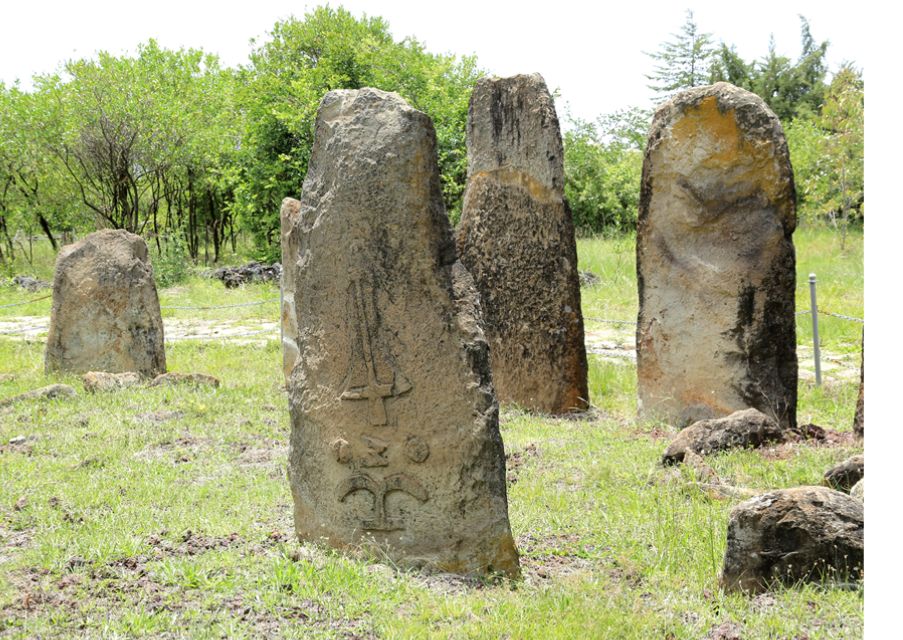
The Tiya Megalithic Site: The geology of Tiya is dominated by Quaternary basalt flows that form the escarpment of the Main Ethiopian Rift. These fine-grained basaltic rocks, easily quarried and shaped, provided the raw material for the tall stelae erected
The Tiya Megalithic Site: The geology of Tiya is dominated by Quaternary basalt flows that form the escarpment of the Main Ethiopian Rift. These fine-grained basaltic rocks, easily quarried and shaped, provided the raw material for the tall stelae erected at the site. Their durability, coupled with the availability of large blocks near the surface, made them suitable for carving and long-term.
Indigenous communities applied stone-working knowledge to transform these basalt slabs into vertical monuments. The carving of swords, geometric figures, and anthropomorphic symbols reflects a highly developed symbolic system, likely linked to funerary rituals and ancestral authority. Local oral traditions preserve fragments of these symbolic meanings, indicating continuity of knowledge systems.
The unique cultural dimension of Tiya heritage site lies in its role as a memory landscape and ritual cemetery. Unlike other megalithic sites, its carvings have display standardized motifs that embodies collective identity, social stratification, and warrior valor. These characteristics, coupled with its UNESCO World Heritage List since 1980, represents one of over 160 recorded megalithic sites across southern Ethiopia give Tiya a pivotal place in Ethiopia as a symbol of cultural continuity and ancestral veneration.